 English
  Tiếng Việt
 Satellite internet is one of the most promising solutions poised to completely change how we connect to the world, especially in rural, remote, or areas not yet covered by fiber optic networks. However, deploying satellite internet requires a complex and synchronized infrastructure, encompassing elements from satellites, ground stations, terminal equipment, to supporting technical aspects. This article will provide a detailed look at the infrastructure needed to deploy satellite internet, explaining how each component contributes to a complete and efficient network.

, the satellite project founded by
1. Vệ Tinh – Xương Sống Của Mạng Internet Vệ Tinh
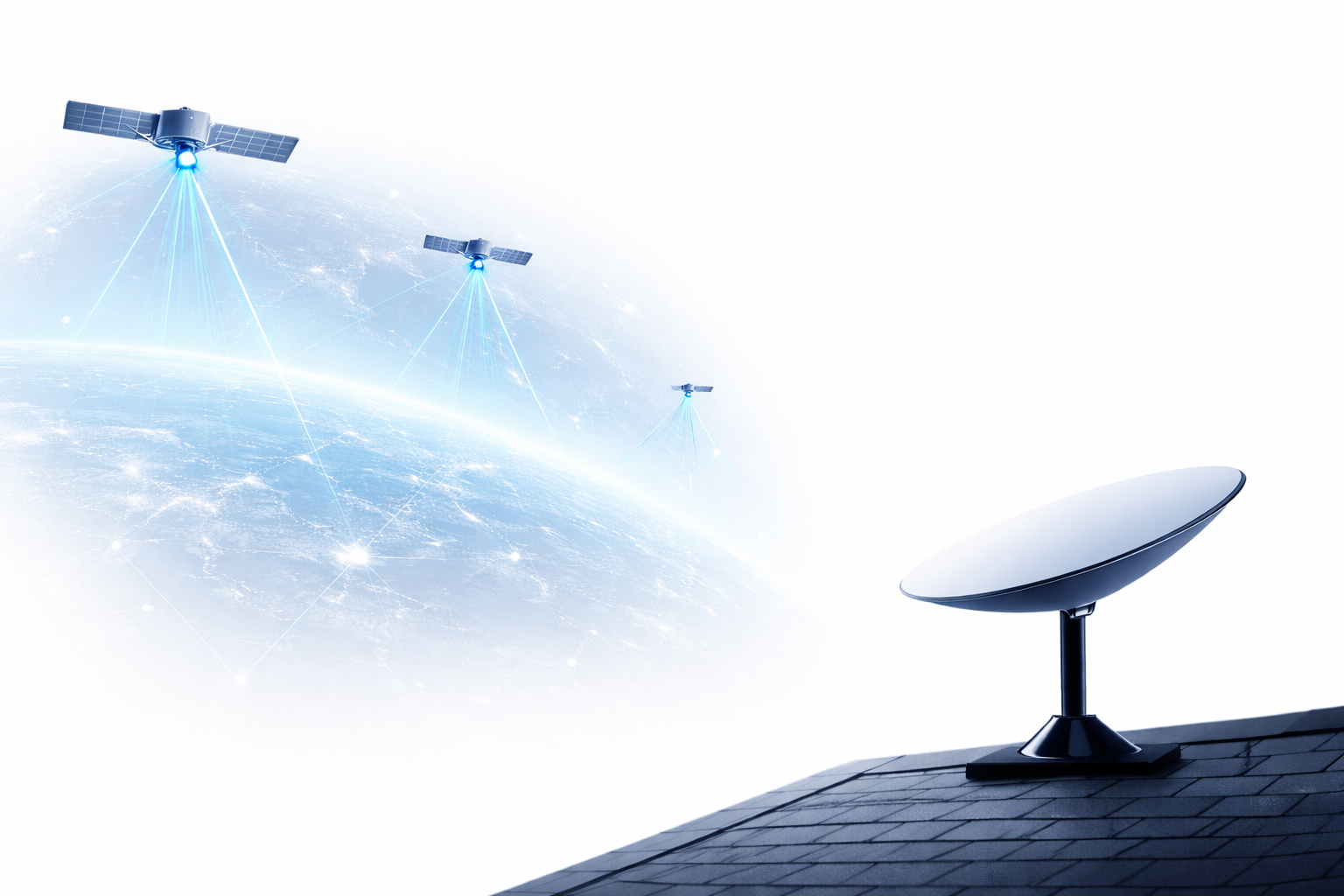
Satellites are the most crucial element in a satellite internet system, as they are the means of transmitting signals between ground stations and end-users. Depending on their orbit, satellites can be categorized into three main types: GEO (Geostationary Orbit), MEO (Medium Earth Orbit), and LEO (Low Earth Orbit).
Vệ Tinh GEO (Geostationary Orbit): Vệ tinh này bay ở độ cao khoảng 35.786 km so với mặt đất và di chuyển với tốc độ giống như tốc độ quay của Trái Đất. Điều này có nghĩa là chúng “đứng yên” trong một điểm cố định so với mặt đất, giúp chúng dễ dàng duy trì kết nối ổn định với một vùng rộng lớn. Tuy nhiên, vệ tinh GEO có độ trễ khá cao (khoảng 500-600 ms) do khoảng cách rất xa từ mặt đất.
MEO (Medium Earth Orbit) Satellites: MEO satellites orbit at altitudes ranging from 2,000 to 35,786 km. They have lower latency than GEO satellites but a smaller coverage area and require more satellites to ensure global connectivity.
LEO (Low Earth Orbit) Satellites: LEO satellites orbit at altitudes of only about 500 to 2,000 km, providing extremely low latency (around 20-30 ms). However, they have a small coverage area, requiring the deployment of thousands of LEO satellites in a constellation to ensure continuous and stable connectivity. Despite high investment and maintenance costs, LEO satellite networks are becoming the preferred choice for satellite internet service providers.
2. Trạm Mặt Đất – Cầu Nối Giữa Vệ Tinh và Mạng Lưới Toàn Cầu
Ground Stations are critical communication points between satellites and the internet network. Each ground station consists of large antennas (also known as dishes), server systems, and electronic equipment for receiving and transmitting signals. These stations must not only ensure stable connections but also be capable of processing large amounts of data from satellites and transmitting them to national or global internet networks.
Hệ thống ăng-ten: Đây là bộ phận nhận và phát tín hiệu từ vệ tinh lên và xuống. Với các vệ tinh GEO, ăng-ten cần có khả năng “theo dõi” chuyển động của vệ tinh. Trong khi đó, đối với vệ tinh LEO, ăng-ten phải có khả năng tương tác với vệ tinh di động liên tục.
Data Processing Center: Ground stations require a powerful server system to receive data from satellites, distribute it via fiber optic cables or radio waves to data centers and end-users.
3. Thiết Bị Đầu Cuối – Cầu Nối Cuối Cùng Đến Người Dùng
Terminal equipment (CPE – Customer Premises Equipment) refers to the devices users employ to connect to satellite internet. For current satellite services, terminal equipment typically includes:
Satellite Dish (Transceiver): This is a compact antenna installed at the user's premises to receive and transmit satellite signals. This antenna can be precisely aligned to optimize signal reception from the satellite.
Modem/Router: This device receives signals from the antenna and converts them into internet signals that users can utilize. Modern modems are capable of supporting high speeds and optimizing bandwidth.
Terminal equipment needs to be designed for simplicity, ease of installation and use, while also being able to operate stably in harsh weather conditions (such as rain, snow, or storms).
4. Mạng Truyền Dữ Liệu – Đảm Bảo Tốc Độ và Ổn Định
One of the major challenges in deploying satellite internet is maintaining stable connections and high data transmission speeds. Although satellites provide global connectivity, transmitting data via satellite requires a robust transmission network utilizing advanced technologies such as fiber optics, 5G, or SD-WAN.
Fiber Optic and Telecommunication Networks: Ground stations will use fiber optic networks or telecommunication connections to transmit data to final destinations (such as data centers or users).
Bandwidth and latency: Both bandwidth and latency affect the quality of satellite internet service. Technologies like SD-WAN (Software-Defined Wide Area Network) help optimize bandwidth distribution and utilization while minimizing latency.
5. Công Nghệ và Quản Lý Mạng – Đảm Bảo Tính Ổn Định và An Toàn
Satellite internet relies not only on hardware but also on advanced software solutions and technologies to ensure stable and secure service:
Bandwidth management: Bandwidth management technologies help ensure that signals from satellites are distributed efficiently, avoiding congestion.
Security technology: Satellite networks must protect data from external threats. Encryption technologies and security protocols such as VPN (Virtual Private Network) and SSL/TLS help protect data during transmission.
6. Legal and Frequency Management
To deploy satellite internet, service providers must comply with legal regulations regarding the use of radio frequencies and issues related to radio wave copyrights. Telecommunications regulatory bodies, such as the International Telecommunication Union (ITU), play a crucial role in allocating frequencies to satellite service providers and ensuring that signals are not interfered with or conflicting with other services.
7. Benefits and Challenges
The deployment of satellite internet brings many clear benefits, such as global connectivity, especially in remote areas, and the creation of a flexible data transmission network, independent of fiber optic infrastructure. However, the biggest challenges remain the very high initial investment costs, as well as the continuous maintenance requirements for satellites and ground stations.

satellite Internet
Conclusion
Satellite internet is a breakthrough solution for providing connectivity to all areas of the world, especially those where traditional network infrastructure cannot be deployed. However, to build an effective satellite internet network, a solid technical infrastructure and advanced technology are needed, from satellites, ground stations, terminal equipment to transmission networks and management solutions. As these technologies become more refined, satellite internet will open up a new future of connectivity, bringing opportunities to many users in areas that have not yet had access to the internet.