 English
  Tiếng Việt
 In today's digital age, fast and stable Internet connection is an essential need for every individual and business. However, the two most popular solutions for providing Internet connection aresatellite solutions and fiber optic networks. Each of these solutions has its own advantages and limitations, depending on the needs and characteristics of each area. So what is the optimal choice? Let's explore the differences between satellite solutions and fiber optic networks in this article.
World Satellites
1. What is a Satellite Solution?
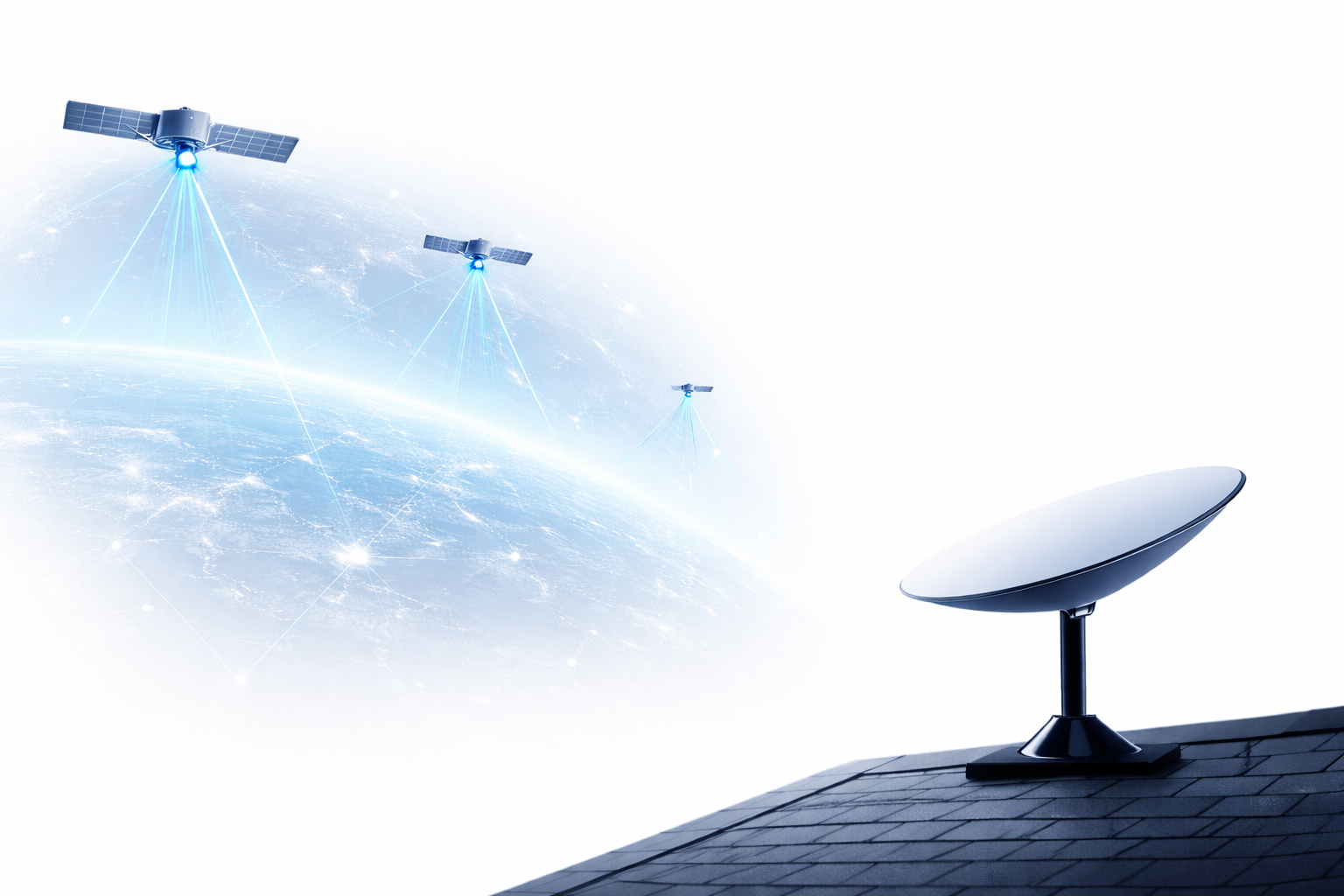
Satellite solutions is a technology that uses satellites in space to transmit Internet signals to end-user devices. This system includes satellites launched into Earth's orbit, transmitting signals from ground stations to users' satellite devices. Satellite solutions are mainly used in areas without stable network infrastructure, such as remote, rural, or countryside areas.
2. What is a Fiber Optic Network?
Fiber optic network is a technology that uses fiber optic cables to transmit Internet signals using light, enabling high-speed and stable network connections. Fiber optic networks are usually installed in urban and city areas with developed telecommunications infrastructure. Compared to other signal transmission technologies, fiber optics offer faster transmission speeds and lower latency.
3. Comparison of Satellite Solutions and Fiber Optic Networks
3.1. Connection Speed
- Fiber optic network: One of the biggest advantages of fiber optic networks is extremely fast data transmission speeds, which can reach gigabits per second. In particular, fiber optics can provide a stable connection and is less affected by external factors such as weather.
- Satellite solutions: Although satellite technology is constantly improving, the connection speed via satellite is still slower than fiber optic cable. Current satellite services can achieve transmission speeds from 25 Mbps to 100 Mbps, depending on satellite technology and geographical location. However, this speed is still incomparable to fiber optic cable in applications requiring large bandwidth.
3.2. Connection Stability
- Fiber optic network: Fiber optic cable is considered one of the most stable network solutions available today. By transmitting signals through glass fibers, fiber optic networks experience fewer interruptions and are not affected by external factors such as bad weather or electromagnetic waves.
- Satellite solutions: Although satellites provide connectivity in many areas, satellite signals can be interrupted or degraded due to factors such as heavy rain, storms, or signal interference from other satellites. This can lead to connection loss or reduced service quality.
3.3. Coverage Range
- Fiber optic network: Fiber optic networks can only operate effectively in areas with developed telecommunications infrastructure, such as large cities or densely populated areas. Laying fiber optic cables to remote or rural areas is quite expensive and time-consuming.
- Satellite solutions: Satellite solutions excels in providing Internet connectivity for remote areas, rural areas, or places without network infrastructure. Satellites can provide Internet connectivity to any area in the world as long as the satellite is visible in the sky. This is particularly useful for hard-to-reach areas where fiber optics cannot provide coverage.
3.4. Investment and Installation Costs
- Fiber optic network: Although the speed and stability are high, the cost of installing a fiber optic network is quite high, especially for areas without existing infrastructure. Laying fiber optic cables through long routes or difficult terrain also requires significant investment.
- Satellite solutions: Satellite solutions has lower initial investment costs compared to laying fiber optic cables, especially in rural or remote areas. The deployment of satellite services does not require complex infrastructure and can be quickly deployed in areas where fiber optic networks are not available.
3.5. Maintenance and Upkeep
- Fiber optic network: Fiber optic networks require regular maintenance to ensure service quality, especially for areas using long fiber optic cables. Fiber optic cable failures or connection equipment need to be checked and repaired promptly.
- Satellite solutions: Although it does not require complex maintenance like fiber optics, satellite solutions still require maintenance of satellites and signal transmission stations. Additionally, the quality of satellite signals can be affected by natural and weather factors, requiring backup solutions to maintain stable service.
4. When to Choose a Satellite Solution or Fiber Optic Network?
- Choose satellite solution: If you live in a remote area without available fiber optic infrastructure, or if your company operates offshore, in forests, or in other remote regions, satellite solutions will be the optimal choice.
- Choose fiber optic network: If you live in urban areas or areas with strong existing telecommunications infrastructure, fiber optic networks will be the ideal solution thanks to its fast connection speed and high stability.
5. Conclusion
Both satellite solutions and fiber optic networks have their own advantages and disadvantages. Satellite solutions are suitable for remote areas, while fiber optic networks offer superior performance in areas with developed telecommunications infrastructure. The choice of solution depends on factors such as coverage, cost, and connection speed requirements. Depending on your specific needs, you can make the optimal decision for your Internet connection system.