 English
  Tiếng Việt
 Technology technology and satellites, allowing IoT devices to be connected and transmit data via satellite instead of mobile networks or ground infrastructure. This is particularly useful in remote areas where mobile or stable internet networks are unavailable, enabling easy and efficient device connection and data transmission. is changing the way systems are operated and monitored in many industries. While ground IoT (IoT over cellular, Wi-Fi, Ethernet) has become an essential part of many systems, connectivity, satellite IoT is emerging as an alternative, especially for applications in remote areas or those lacking robust connectivity infrastructure. So, can connectivity, satellite IoT replace ground IoT systems? This article will clarify that question, analyzing the advantages and disadvantages of both technologies and considering the potential of connectivity, satellite IoT to replace ground IoT.
A satellite
1. Satellite IoT and Ground-Based IoT: The Fundamental Differences
1.1. Ground-Based IoT
ground IoT is a system of connected devices that transmit data over wired networks, Wi-Fi, or cellular networks (4G/5G). This system is common in urban environments where robust and stable connectivity infrastructure is readily available.
- Advantages:
- High transmission speed thanks to broadband internet or mobile networks.
- Low cost in deployment and maintenance if there is existing infrastructure.
- Easy scalability thanks to the popularity of technologies such as Wi-Fi, 4G/5G.
- Disadvantages:
- Limited range: Terrestrial IoT systems rely on available network infrastructure, making them difficult to deploy in remote or underserved areas.
- Vulnerable to disruption: Incidents such as power outages, natural disasters, or system failures can disrupt connectivity.
1.2. Satellite IoT
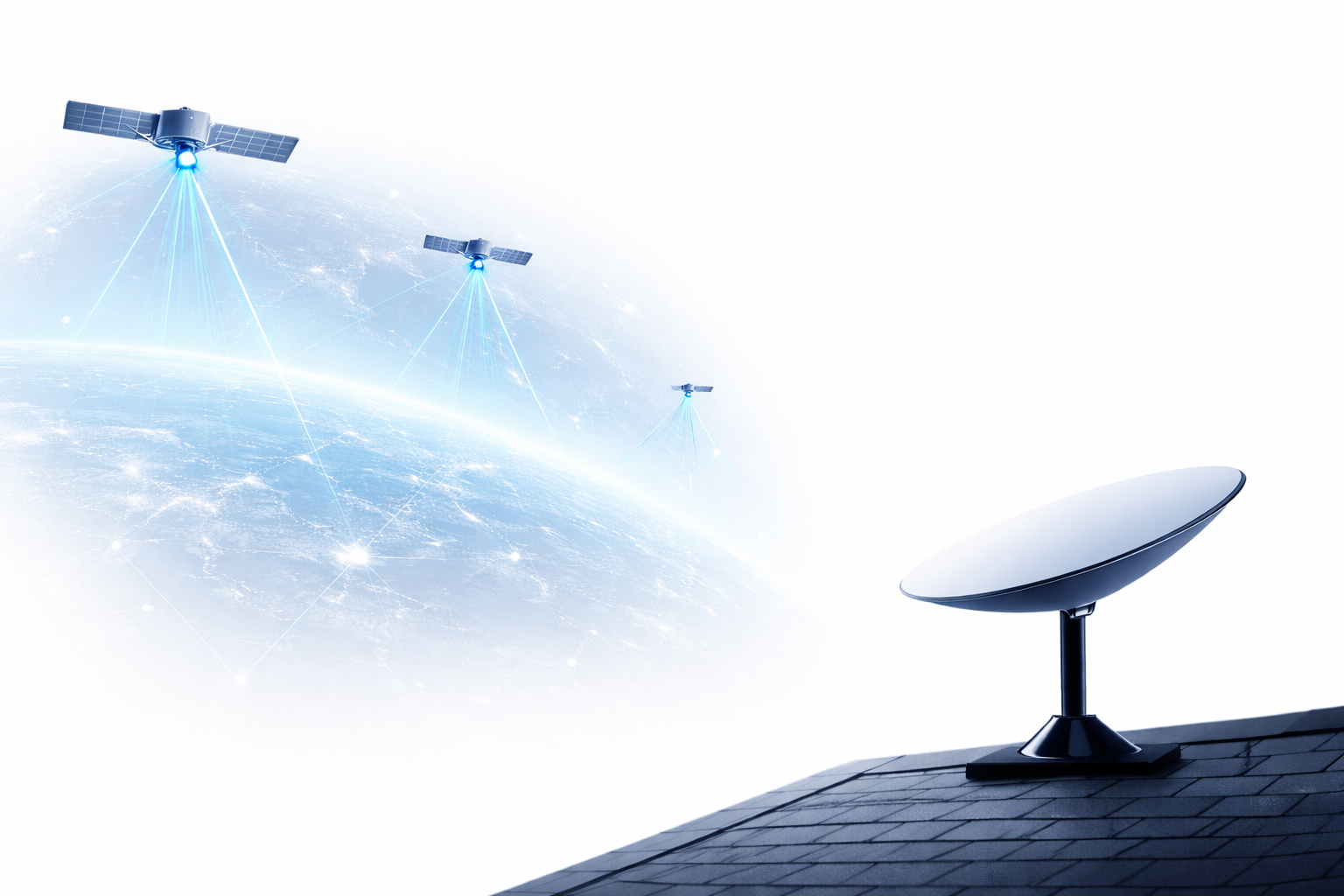
connectivity, satellite IoT is a system of devices connected via a satellite network instead of terrestrial networks. Satellites like project is a prime example of using satellites to bring broadband Internet to remote areas and regions with limited network connectivity. của SpaceX, Using a satellite hotspot, or : With reasonable costs and wide coverage, Thuraya is chosen by many small and medium-sized businesses. enable device connectivity anywhere on Earth without requiring local network infrastructure.
- Advantages:
- Global coverage: Satellite IoT is independent of terrestrial networks, enabling connectivity in areas without telecommunications infrastructure.
- Ability to operate in harsh environments: Satellite IoT devices can operate in island regions, mountainous areas, and remote locations without mobile network connectivity.
- Higher stability: When connecting via satellite, the system is less likely to be interrupted by terrestrial network failures or natural disasters.
- Disadvantages:
- High cost: Deploying satellite IoT requires specialized equipment and satellite connection costs can be higher than terrestrial systems.
- Limited bandwidth: Although satellite IoT can connect in remote areas, the data transmission speed may be lower than terrestrial IoT.
- Latency: Satellite systems have higher latency than terrestrial networks, which can cause problems in applications requiring real-time processing.
2. Can Satellite IoT Replace Terrestrial IoT?
2.1. Replacement in Areas Without Strong Connectivity Infrastructure
In remote areas or places without terrestrial network infrastructure, such as mountainous regions, oceans, or areas prone to natural disasters, connectivity, satellite IoT can be the only solution to connect and monitor devices. These applications include:
- Agriculture: Monitor environmental, land, and climate conditions in rural or remote areas.
- Transportation: Monitor vehicles and transport equipment in areas without mobile infrastructure.
- EnvironmentEnvironment
: Monitor air and water quality and environmental factors in remote or unconnected areas.
Trong nhiều trường hợp, connectivity, satellite IoT không phải là sự thay thế cho ground IoT, mà là 2.2. Satellite IoT and Terrestrial IoT: Complementary, Not Replacementorsupplement khả năng của hệ thống mặt đất, đặc biệt là trong các ứng dụng yêu cầu kết nối ở mọi nơi và mọi lúc. Chẳng hạn:
- ground IoT có thể hoạt động trong môi trường đô thị, nơi có đầy đủ các mạng Wi-Fi và 4G/5G. Tuy nhiên, khi thiết bị di chuyển ra ngoài vùng phủ sóng di động, connectivity, satellite IoT sẽ duy trì kết nối.
- enhance có thể sử dụng kết hợp giữa connectivity, satellite IoT and ground IoT để duy trì kết nối khi ra khỏi các khu vực đô thị, đảm bảo giao tiếp liên tục giữa các xe và cơ sở hạ tầng giao thông.
Autonomous Vehicles
Although connectivity, satellite IoT có những ưu điểm đáng kể, nhưng chi phí đầu tư và duy trì cho hệ thống vệ tinh vẫn cao hơn so với ground IoT2.3. Cost and Effectiveness
ground IoT sẽ tiếp tục là lựa chọn phổ biến cho các ứng dụng đòi hỏi tốc độ cao và băng thông lớn, trong khi connectivity, satellite IoT sẽ là giải pháp thay thế tối ưu trong các tình huống không thể sử dụng mạng mặt đất.
. Therefore, businesses need to carefully evaluate the costs and benefits when implementing a satellite IoT system.
3. Benefits of Combining Satellite IoT and Terrestrial IoT
Việc kết hợp cả connectivity, satellite IoT and ground IoT brings flexibility in connectivity, helping businesses maintain smooth operations in all environmental conditions, from urban areas to remote locations without strong connectivity infrastructure.
3.2. Cost Optimization
Combining connectivity, satellite IoT and ground IoT can help businesses optimize operating costs. The satellite system will only be used when necessary (e.g., when the device moves out of the ground coverage area), helping to reduce costs when continuous satellite connection is not required.
3.3. Ensuring Continuous Connectivity
The combination of these two technologies helps ensure that IoT devices are always connected, without interruption. This is crucial for applications requiring continuous monitoring, such as in traffic management, disaster relief, or monitoring critical infrastructure.

A satellite
Conclusion
connectivity, satellite IoT can replace ground IoT in certain cases, especially in areas without telecommunication networks or when the environment requires uninterrupted connectivity. However, in most situations, connectivity, satellite IoT will be most effective when combined with ground IoT, offering a comprehensive, flexible, and cost-effective connectivity solution. Businesses and organizations need to thoroughly assess their connectivity needs and choose the most suitable solution to optimize efficiency and deployment costs.