 English
  Tiếng Việt
 Satellite internet has become a popular choice for internet connectivity in hard-to-reach or remote areas where traditional telecommunications infrastructure is non-existent or underdeveloped. However, a key question many users still wonder is: Is satellite internet secure? In this article, we will delve into the factors affecting the security of satellite internet, potential threats, and the protective measures that users and service providers can take to ensure safe usage.

World Satellites
1. How Satellite Internet Works and Security Considerations
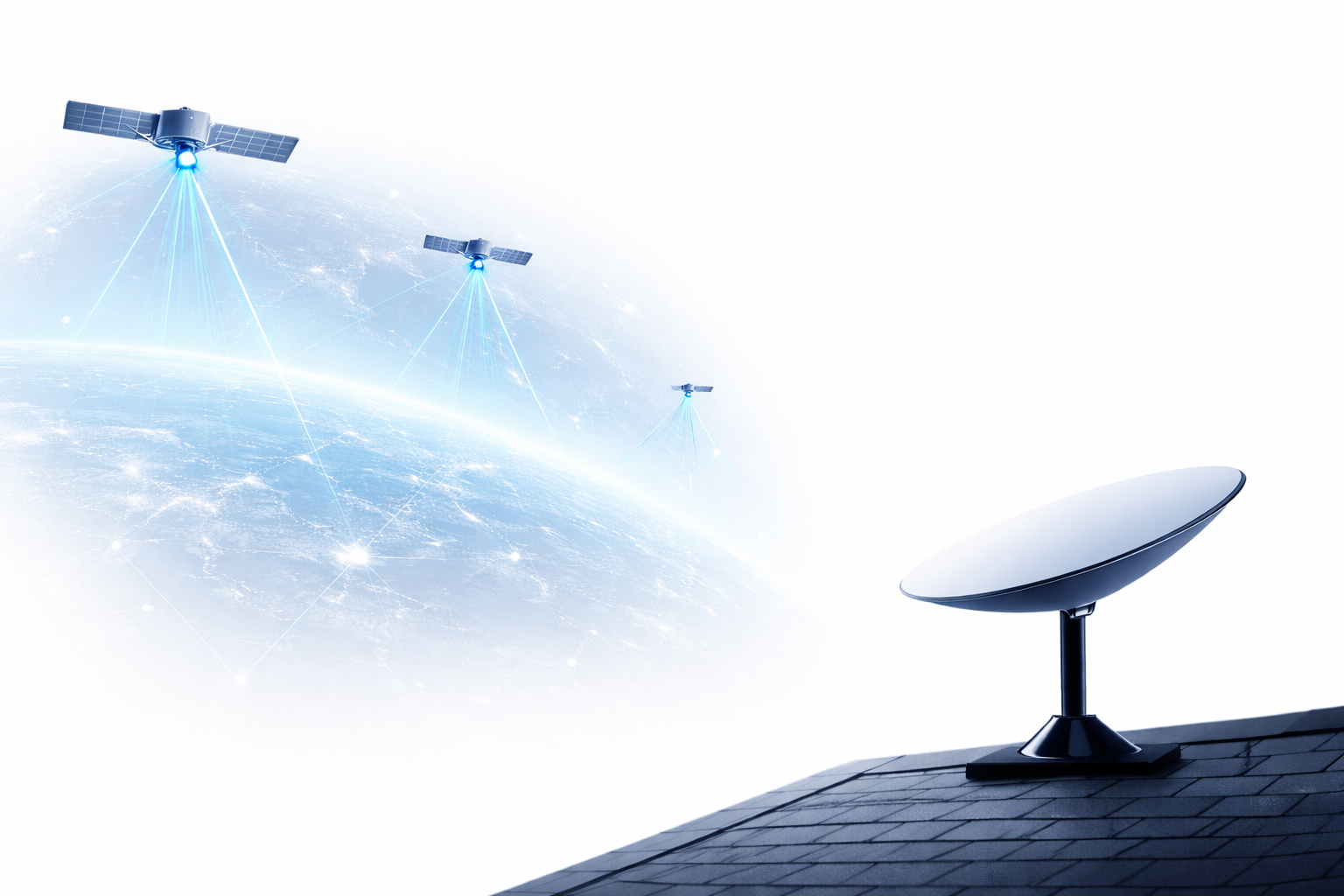
Satellite internet works by transmitting signals from an artificial satellite in orbit to ground stations and vice versa. The characteristic of this transmission method is that the signal has to travel through open space, so data security during transmission and storage is crucial. Here are the security factors that satellite service providers need to focus on:
1.1 Data Encryption
One of the most important security factors of a satellite internet system is encryption. Data transmitted via satellite is usually encrypted to protect it from attacks or information theft during transmission. This encryption helps protect data from unauthorized access by unwanted parties.
AES-256 Encryption: Most satellite internet service providers use strong encryption algorithms such as AES-256 (Advanced Encryption Standard with a 256-bit key) to protect sensitive information. AES-256 is one of the most secure encryption standards available today, widely used across many industries.
SSL/TLS: For web connections, SSL (Secure Sockets Layer) or TLS (Transport Layer Security) encryption is also used to ensure that all internet communication is encrypted and secure.
1.2 User and Device Authentication
User authentication is an important security factor that ensures only legitimate users can access your system and data. Modern satellite systems often use strong authentication methods:
Two-Factor Authentication (2FA): This authentication method requires users to provide two independent factors (usually a password and a confirmation code sent via SMS or an authenticator app) to access the service. This enhances security and prevents account hijacking.
Digital Certificates: Satellite devices and systems can also use digital certificates to verify the identity of devices connecting to the satellite network.
1.3 Network Attack Protection
With the ability to transmit data through outer space, satellites can be targets of various cyberattacks. In particular, Denial of Service (DDoS) attacks and satellite signal spoofing attacks can disrupt services or lead to data leakage.
Phát hiện xâm nhập (Intrusion Detection Systems – IDS): Các hệ thống IDS có thể giúp phát hiện và ngăn chặn các cuộc tấn công nhằm vào cơ sở hạ tầng mạng vệ tinh.
Satellite Signal Spoofing: Satellite signals can be attacked and spoofed by attackers using powerful transmitters. This can lead to users connecting to fake satellites and having their information stolen.
2. Comparing the Security of Satellite Internet and Traditional Internet Services
To better understand the security level of satellite internet, we need to compare it with traditional internet connection services such as fiber optics and mobile networks.
2.1 Security of Fiber Optic and Mobile Networks
Fiber optic network: Internet services via fiber optic cables use light signals to transmit data, and although data can be protected through encryption and other security measures, fiber optic systems can be easily attacked at physical connection points, such as underground cable hubs or poorly protected network nodes.
Mobile network: Mobile networks, such as 4G and 5G, can protect data using security protocols like IPsec and SSL/TLS, however, mobile networks also face numerous threats, including the possibility of attacks through base stations or insecure access points.
2.2 Security of Satellite Internet
While satellite Internet has some robust security measures, it also has some potential weaknesses. Satellite signals can be easily jammed or spoofed, and because signals are transmitted through open space, remote attacks can pose a danger.
Remote Attacks: Attackers can jam or steal satellite signals from a distance, disrupting connections or compromising user data.
3. Security Challenges of Satellite Internet
Besides the security measures already mentioned, satellite Internet still faces several significant security challenges:
3.1 Issues with Spoofed Satellites
Spoofing attacks on satellite signals can occur, where an attacker broadcasts a fake satellite signal to trick devices into connecting to their network. This can lead to major information security risks.
3.2 Areas Lacking Security Infrastructure
Another issue is the lack of security infrastructure in areas using satellite Internet. These areas may lack secure data centers or network security experts, making data protection difficult.
4. Advanced Security Measures for Satellite Internet
To enhance the security of satellite Internet systems, several measures need to be implemented:
Use of blockchain technology: Researchers are experimenting with the use of blockchain technology to ensure data integrity and security on satellite networks. Blockchain can help authenticate and protect transactions between satellite devices.
Regular Software Updates: Satellite service providers need to ensure that their software and security protocols are continuously updated to protect the system from new threats.
User Training: Users need to be trained on how to use satellite Internet safely, including protecting personal information and recognizing signs of cyberattacks.

Internet Satellites
5. Conclusion
While satellite Internet can provide a high level of security with strong encryption and authentication measures, it still faces significant security challenges, particularly the potential for remote attacks and the lack of security infrastructure in usage areas. Therefore, using satellite Internet safely requires a combination of advanced security technology and user awareness of potential risks.