 English
  Tiếng Việt
 Satellite internet is an indispensable solution for remote areas where fiber optic or mobile networks cannot reach. However, as more and new technologies emerge, relying solely on satellite internet is no longer the only option. So, what are the alternative satellite internet solutions currently attracting attention and could become new trends for internet connectivity in areas with unstable network infrastructure?

satellite Internet
1. Mobile Broadband Internet (4G/5G) – High Speed and Convenient
4G and 5G mobile networks are becoming one of the most effective alternatives to satellite internet, especially in areas with strong mobile signal coverage. 4G/5G networks offer high transmission speeds, easily meeting the connectivity needs of users in areas without fiber optic networks. Thanks to the strong development of network operators, people in rural or suburban areas can fully utilize high-quality internet without relying on satellites.
Advantages:
- High Speed: 5G networks can reach speeds of up to 10 Gbps, allowing users to watch HD videos, play online games, and work remotely without interruption.
- Ease of Use: With a 4G/5G-enabled device such as a smartphone, mobile router, or 4G/5G hotspot, users can connect to the internet instantly.
- Mobility: Internet via mobile networks can be used in various locations, from rural to urban areas, as long as there is a mobile signal.
Disadvantages:
- Unstable connection in weak signal areas: In remote or isolated areas, connection speeds can be severely degraded.
- High service costs: Although it can offer high speeds, the cost of using 5G networks can be quite expensive for some users, especially with large data usage.
2. Fiber Optic – A Stable Choice for Urban Areas
Fiber optic internet is one of the most long-term and effective alternatives to satellite internet, especially in large cities or areas with developed infrastructure. With stable speeds and large data transmission capabilities, fiber optics is always the preferred choice for households, businesses, or educational institutions requiring fast and continuous network connections.
Advantages:
- High and stable speed: Fiber optic internet can provide transmission speeds up to 1 Gbps and higher, meeting all needs from work, study, entertainment to online gaming.
- Low latency: With low latency, fiber optic internet is very suitable for real-time connection activities such as online gaming, video calls, or online conferences.
- High durability: Not affected by weather conditions like satellite internet, ensuring a stable connection.
Disadvantages:
- Requires existing infrastructure: Fiber optics are not always available in remote areas. Installing fiber optics in these areas can be difficult.
- High installation costs: Sometimes, the cost of laying wires and installing fiber optic cables can be quite expensive, especially in areas without existing infrastructure.
3. Public Wi-Fi – Free connection in urban areas
Public Wi-Fi has become a popular alternative to satellite internet, especially in large cities or densely populated areas. In public places such as parks, commercial areas, train stations, or cafes, free Wi-Fi allows residents and tourists to easily access the internet without having to rely on paid services.
Advantages:
- Free and easy access: Public Wi-Fi can be accessed for free in many places, saving users money.
- Connection sharing capability: Some public Wi-Fi services also support connecting multiple devices simultaneously, which is very convenient for groups of users.
Disadvantages:
- Security issues: Public Wi-Fi networks are often unencrypted, making users vulnerable to attacks or personal information leaks.
- Unstable connection quality: Crowding and user overload can lead to reduced connection speeds, especially during peak hours.
4. Fixed Wireless Internet
Fixed Wireless internet is an increasingly popular solution, especially in areas where fiber optic cables cannot be laid. This technology uses radio waves to transmit signals from a broadcasting station to receiving devices in users' homes. With this method, users do not need to install cables but can still experience a stable internet connection.
Advantages:
- Easy deployment: No need for digging or cable laying, saving time and costs.
- Stable speed: Although it cannot reach fiber optic speeds, the speed of Fixed Wireless internet is sufficient for basic needs such as web browsing, watching HD videos, and remote work.
- Suitable for rural areas: This is an ideal solution for areas where laying fiber optic cables is difficult or not feasible.
Disadvantages:
- Limited coverage: Users must be within the signal range of the broadcasting station, and connection quality will decrease if the distance is too far.
- Affected by weather conditions: Rainstorms or bad weather can degrade signal quality.
5. Powerline Networking
Powerline Networking is an innovative solution that turns your home's electrical wiring into an internet network. This technology uses signal transmitters through power outlets to transmit data, allowing users to connect to the internet without the need for additional network cables. This is a useful solution for homes with complex structures where running fiber optic cables or traditional Wi-Fi is difficult.
Advantages:
- Easy installation: No need to change the home's electrical system; simply use Powerline devices and plug them into power outlets to connect to the internet.
- Stable connection within the home's range: Internet via Powerline is often less affected by obstacles or distance compared to Wi-Fi.
Disadvantages:
- Limited range: Signal quality will gradually decrease if connected far from power outlets, or in homes with old electrical systems.
- Difficult to use outside the home: This technology only works within the building or apartment, and cannot be used for areas outside.

Small satellite internet
6. Low Earth Orbit (LEO) satellite internet
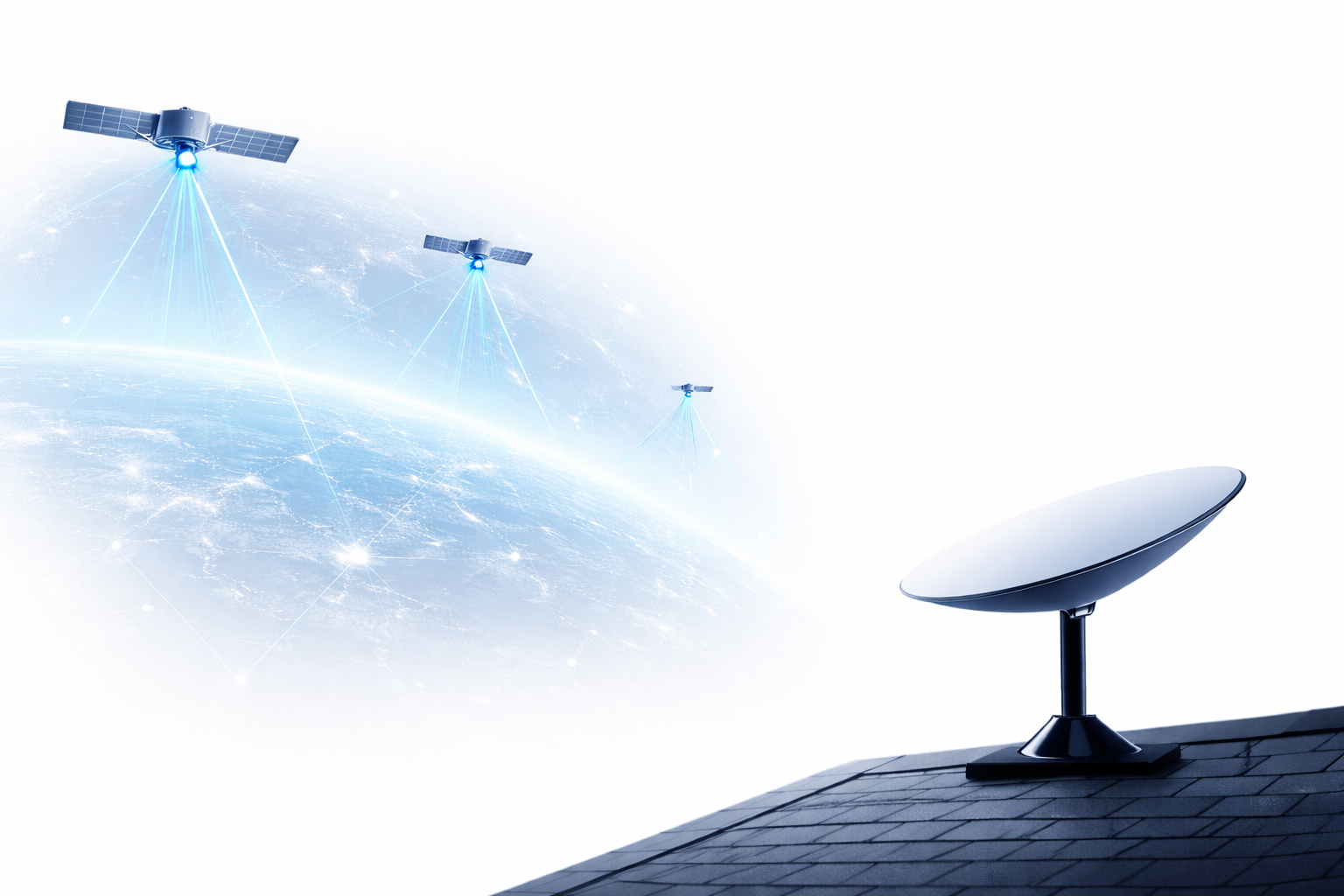
Companies like SpaceX with its Starlink project have introduced a new satellite internet solution through LEO (Low Earth Orbit) satellites. These satellites operate at a much lower altitude than traditional satellites, helping to reduce latency and provide fast and stable connections. This is one of the alternatives to traditional satellite internet, with the ability to provide global connectivity even in remote areas.
Advantages:
- Fast speeds and low latency: LEO satellites offer much higher speeds and lower latency than traditional satellite internet.
- Global connectivity: Starlink's service and that of its competitors can provide global coverage, enabling internet connectivity for areas that cannot be reached through other means.
Disadvantages:
- High cost: LEO satellite internet service currently remains quite expensive, both in terms of hardware and usage costs.