
 English
  Tiếng Việt
 In the digital age, satellite IoT is becoming increasingly important in connecting remote devices and collecting data from hard-to-reach areas. One of the key factors for effective satellite IoT operation is satellite IoT connectivity standards. These connectivity standards not only ensure the stability and sustainability of the network but also support the optimization of data transmission, helping IoT applications operate accurately and quickly. In this article, we will explore the popular connectivity standards in satellite IoT today, understand more about how they work, and why they are important in the development of IoT applications across many industries. 

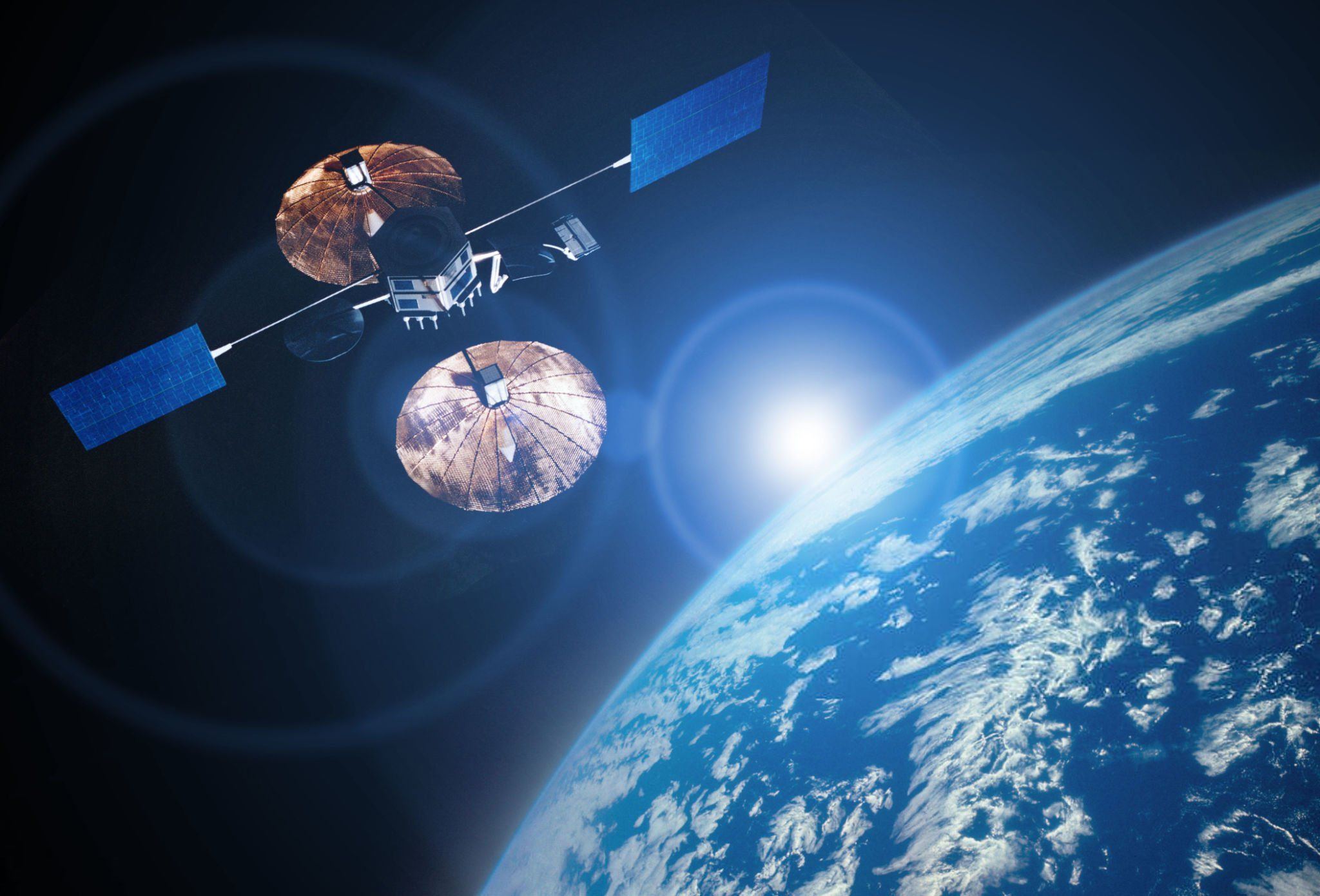
Satellite
1. What is Satellite IoT?
1.1. Definition of Satellite IoT
satellite IoT (Internet of Things via Satellite) is a network of devices connected via satellite to collect, transmit, and process data remotely. These devices can be sensors, monitoring devices, machines, or mobile devices capable of communicating over a satellite network, independent of terrestrial network infrastructure. Satellite IoT plays a crucial role in fields such as environmental monitoring, transportation, smart agriculture, and especially applications in remote areas or areas with complex terrain where terrestrial network connection is not possible.1.2. Challenges in Satellite IoT
Although satellite IoT offers many benefits, there are also some challenges that need to be addressed, especially regarding stable connectivity and data transmission speed. To address these challenges, satellite IoT connectivity standards become extremely important, helping to optimize data transmission and maintain connectivity under all environmental conditions.2. Popular Satellite IoT Connectivity Standards
2.1. L-band
L-band is one of the most popular connectivity standards in satellite IoT. This frequency band is often used for data transmission applications with low bandwidth and long distances. Because this frequency band can penetrate thick atmospheric layers and is less affected by weather, it is very suitable for satellite IoT applications in hard-to-reach areas.- Advantages: Easy to connect and maintain stable signal in bad weather conditions.
- Application: Widely used in applications such as environmental monitoring, maritime and aviation operations, as well as agricultural and wildlife monitoring systems.
2.2. Ku-band
Ku-band is another popular satellite connection standard in IoT, with a higher frequency than L-band. It supports higher data transfer rates, suitable for applications requiring large bandwidth such as satellite television, video transmission, and satellite internet services.- Advantages: Provides high bandwidth, ideal for applications requiring large data transmission such as live streaming, video surveillance, and image sensor systems.
- Application: Commonly used in security monitoring systems, traffic management, and services requiring large data transmission.
2.3. Ka-band
Ka-band offers a higher frequency band than Ku-band, enabling data transmission at extremely high speeds and large bandwidth. This is crucial for applications requiring continuous and rapid data transmission.- Advantages: Provides extremely high data transfer speeds and robust connectivity for services requiring large bandwidth.
- Application: Used for high-speed internet services, high-definition video data transmission, as well as applications requiring low latency and large data transmission in the industry.
2.4. S-band
S-band is another satellite connection standard commonly used in satellite IoT applications requiring moderate data transfer speeds. S-band is ideal for systems that do not require excessively high bandwidth but still need stability in harsh environments.- Advantages: Moderate bandwidth, can operate stably in adverse weather conditions and is less affected by rain.
- Application: Used in satellite communication systems for government and military organizations, and for environmental monitoring purposes.
2.5. MEO (Medium Earth Orbit)
MEO is a type of intermediate satellite orbit, located between geostationary orbit (GEO) and low Earth orbit (LEO). MEO satellites typically have lower latency than GEO satellites and can provide more reliable connectivity than LEO satellites, although their coverage is not as wide as GEO satellites.- Advantages: Low latency, providing stronger and more stable connectivity than GEO satellites in IoT applications.
- Application: Used in applications requiring fast and stable connections such as real-time monitoring in transportation and military operations, and high-speed Internet services.
2.6. LEO (Low Earth Orbit)
LEO is the closest orbit to Earth and is often used for satellite IoT systems requiring fast connectivity, low latency, and continuous data collection from sensors. LEO satellites have low orbits, helping to provide robust connectivity and less susceptibility to environmental factors.- Advantages: Low latency, providing fast data transmission speeds and wide coverage.
- Application: Suitable for environmental monitoring, remote asset tracking, and vehicle tracking applications.
3. Why Are Connectivity Standards Important for Satellite IoT?
3.1. Ensuring Continuous Connectivity
Connectivity standards insatellite IoTensure that IoT devices maintain connectivity, even in areas without terrestrial networks. This is a key factor in collecting and transmitting data remotely without interruption.3.2. Support Continuous Data Transmission
Satellite connectivity standards such asKa-bandor Ku-bandcan provide high bandwidth and fast data transmission, which is necessary for applications requiring real-time information transfer.3.3. Enhance Security and Reliability
Modern satellite connectivity standards not only provide stable connections but can also secure transmitted information, helping to protect critical data in IoT applications, especially in sensitive industries such as defense and security.
Satellite